Showing posts with label success. Show all posts

Thursday, August 20, 2015

Ever Do What You Said You Wouldn't?


EVER DO WHAT YOU SAID YOU WOULDN'T?

I was recently asked if I could facilitate a workshop intended to help align an executive team that had gone through an enormous amount of change. Almost half of the dozen, or so, team members had joined the organization within the past six months. 

I said I could facilitate the process and provided a proposal that included a team alignment workshop. 

They hired me.

Oh, the workshop happened. But, I did anything but facilitate.

You see, I had just re-engineered my content. I had a new workbook full of new stuff that I couldn't wait to share with everyone. That "stuff" included information, activities, and videos all identified, crafted, and assembled to facilitate a new process through which a team could become aligned in a way that would be meaningful for the organization and to each individual.

Then, a funny thing happened.  I started talking.

I started sharing my pearls of wisdom and the gold verbal nuggets I'd thought up in the previous weeks while I was developing this "new and improved" team alignment process. 

Apparently, I liked the sound of my voice so much...I kept on talking...and sharing...I felt so generous!

What I Planned To Not Do

My client didn't need me to talk and share so much. He needed the people on his "new" team to talk and share.

He gave me a few signals throughout the afternoon. He tactfully urged me several times to get to the part where his people could start to define the reasons why they would want to connect with each other. He wanted them to discover why they might start to develop trust so that some day they'd love working with each other enough to ask more of, and give more for, each other when they really needed to.

But, by that point, the train (a.k.a. my mouth) had gained a lot of momentum. I'd gotten far and deep enough into the minutia of most of the concepts that I was compelled to take them the rest of the way despite his polite and respectful signals. 

So, when the afternoon was almost over and we only had about a third of the time needed to start the process I had planned to facilitate I put myself in a position where I had to make a choice: Start the process at the beginning knowing it won't be finished? Or, skip a few steps and get to the heart of the process?

I chose the latter. It didn't go well. 

I tried to pull everyone straight to the climactic point in my process where they would all join hearts and hands and make up a team song, or something. Meanwhile, they struggled to build a framework on top of something they hadn't had a chance to build a foundation under. Thanks to me, they knew everything there is to know about the building materials for that foundation, but I didn't give them a chance to put their hands on them.

What I Said I Wouldn't Do

I didn't facilitate a workshop! To facilitate is to "make easier or less difficult," "to assist the progress of." I didn't do that. I didn't make it easier for my client's team members to progress in the development of connection, trust, and love. I didn't make it harder for them either...but that's not the point.

Instead, I did what I'd always said I didn't want to do if I were going to get into this kind of business: regurgitate. I puked "wisdom" all over them. Not once, not for a short period...for several hours!

How I Felt About It After

I felt like anyone who, drunk on his own wine, threw it back up on people he wants to be his friends- Disgusted and dissatisfied with myself. 

When the workshop ended, at first, I wasn't sure how well it had gone. As I was driving home after the workshop, I kept asking myself, "Are they even going to have me back?" The inquiring voice was my subconscious trying to force the question to a conscious level. Was I successful at facilitating the workshop? Did I give them a reason to continue the conversation? I just didn't know. I felt terrible as if I'd broken a promise. The truth of the matter was, I did not do what I'd said I'd do. Not completely anyway.

I'm glad I listened to that voice and heeded the subconscious signal...or else I'd still feel disgusted and dissatisfied with myself today.

What I Did About It

First, I had another workshop with another client five days later. I changed my whole approach. I followed the plan I'd envisioned but didn't prepare well enough to execute in the previous workshop. I could tell by the level of engagement, the animated conversations, the singing (OK, there wasn't any spontaneous singing...but it would have been really cool if there was!)

Second, I went back to that first client and I told him the truth about my dissatisfaction. I said, "I apologize if my learning curve compromised the value of the day in terms of your team's ability to align with its newer members. I know I could have done better. I recognize I wouldn't be able to live up to my own core values of serving, being trustworthy, supportive, seeking, creative, and courageous if I didn't reach out to communicate these thoughts with you, even if doing so is difficult."  And, yes, it was really difficult.

In the end, I thanked him for his patience and for the grace he showed during the workshop and told him I looked forward to seeing where the relationship might progress. 

What Happened Next

Well, so far, nothing. I haven't heard back from him. Not yet. Maybe never, although I am eager to see whether the "relationship might progress" from here. 

But, it's not always about the results you get. I feel better. I'm still not satisfied with the way I conducted myself during that workshop, but I can't turn back and change that. Instead, I created the possibility for the truth to become a part of the conversation and I followed a path from failure to values-driven success:

1) I felt like I'd failed and paid attention to the signals which indicated so. You see, I gave a workshop. It would be easy to call it a success.
3) I asked why it felt like I'd failed even though it appeared I'd done what I'd been hired to do. It's difficult to argue with success, you know.
4) I determined what I could do better the next time.
5) I did it better the next time.
6) I told the truth. I admitted that in that workshop I did not perform like the expert I said I was...that I did not act like the facilitator I've been for others countless times before and should have been for my client that day. 
7) I found satisfaction in my actions regardless of the results and the conviction to keep moving forward...even though it's really hard.

"Success is getting what you want. Values-driven success is getting what you want and being the person you want to be. Here's the catch, you can't get what you really want if you are not first, the person you want to be." (from Finding Success).

I may not be as self-aware as I need to be in the moment...I'm human...but I'm thankful to be willing and courageous enough to hear the voice I often want to drown out with self-served "atta boys;" the one that tells me I could have done better. Shame cannot be overcome without facing it.

Onward; full of fear and imperfection. Yet, I go.

What Did You Plan to Do and Didn't...or Not To Do and Did?

Ever not do what you'd said you'd do even though, technically, you could call it a success? What happened? What did you do about it and how did that change things for you for the better...or worse? 

I'd love to hear your story and so would everyone else, so why not share it in the comments section, below! What's the matter? Afraid we'll laugh at you? It's hard to laugh at what we see in the mirror.


BUY THE BOOK!
ABOUT THE AUTHOR: Tom Eakin is the author of Finding Success and the Success Engineer at BoomLife. LEARN MORE ABOUT TOM...


Monday, July 27, 2015

Succeeding at Dodgeball and in Life

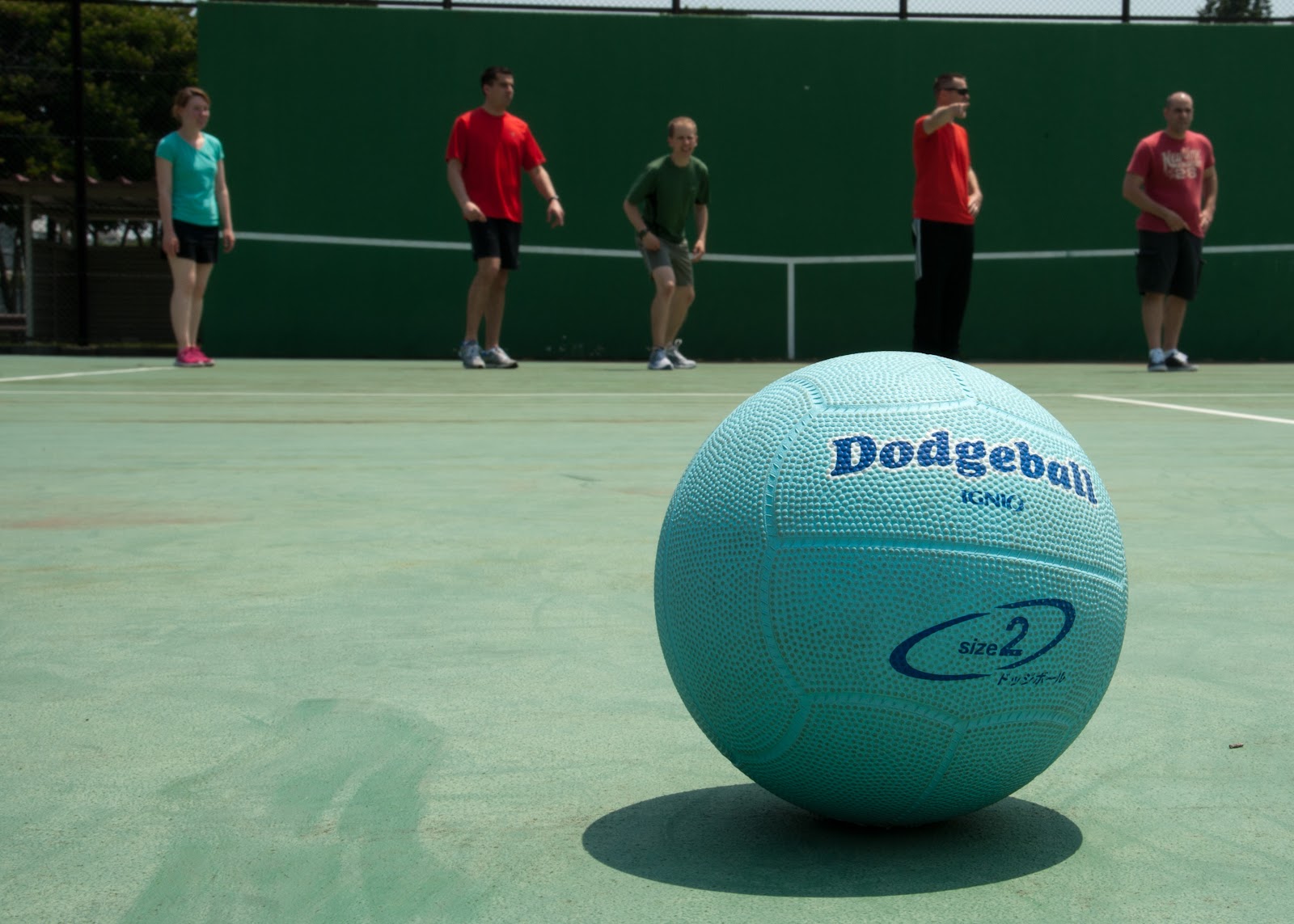
A Dodgeball on a court,

SUCCEEDING AT DODGEBALL AND IN LIFE

To understand how succeeding in life is much like winning at dodgeball, you first need to understand how your brain uses heuristics, or shortcuts, to make decisions.

Think of your brain as having two systems. In one of those systems, System 2, we analyze data rationally. System 2 serves us very well in making decisions that reduce risks when choices, possible results, and probabilities are known.

But, we live in a world of uncertainty, especially where potential results and probabilities are concerned. So, we have System 1 that uses shortcuts, or heuristics, to help us make decisions.


WHY WE LIKE SYSTEM 1 MORE

There are several fundamental reasons why we have a strong preference to use System 1 over System 2:
  1. System 2 requires a lot of energy and our brains are hard-wired to allocate less energy to thinking than action.
  2. Real life scenarios are typically full of uncertainty. Sometimes, we just don’t have the time to gather information, but back to reason number one: Our brains just don’t want to.

Gerd Gigerenzer gave an interesting talk (TEDxNorrkoping, Sweden, 2012) titled “Simple Heuristics That Make Us Smart,” which provides some great examples of heuristic-level thinking and how it can help us. At 5:30, he provides the example of the Gaze Heuristic to show how mental shortcuts help us catch a fly ball, like in baseball.

I like the example. But, life is life is more like dodgeball than baseball in that:
  1. We must concern ourselves with more than one ball.
  2. We can’t catch every ball.
  3. Some balls, we want to dodge.

HEURISTICS IN DODGEBALL

In dodgeball, we need to prioritize so we can make fast decisions. Here are just a few factors to consider as you attempt to thrive amongst your:
  1. Avoid what is most dangerous:
    1. Smaller balls can be thrown faster by just about anyone. They sting more when they hit you.
    2. Watch for the kid who has an OK arm and is waiting for that moment when you’re not looking! Especially if he has a small ball.
    3. Stay away from the kid whose arm is so good it doesn’t matter whether you see it coming.
    4. Larger balls are better for blocking than small ones.
    5. Avoid throwing larger balls, they’re easier for the opponent to catch.
  2. Seek the best opportunities:
    1. The bigger the ball coming at you, the easier it is to catch.
    2. Any kid who doesn’t see you is the best target.
    3. Aim low to avoid head shots and bloody noses!
    4. The payoff for catching someone out is higher if someone on your team is out.

The point is, there is a lot to process and you don’t have time to process everything in dodgeball or in life. Do you throw, catch, block, or dodge? Who is  throwing at you? Who do you pick for your next target?

To succeed, you create mental shortcuts that help you decide and act most efficiently. But, how yo prioritize is critical. Without cognitive bases skewed toward safety, following self-serving heuristics can lead you to knock someone upside the head really hard with the little ball. Sure, he’s out, but only because he’s bleeding out of his nose. And, you’re out too because you focused more on throwing hard than aiming low! It’s hard to get one of your friends to catch you back in when the reason you’re out is because you were a jerk.


HEURISTICS IN LIFE

Life is much the same. Decision-making is critical. And, much like in dodgeball, prioritizing is the key to making heuristics work to your advantage. So, it’s important to understand what the priorities of success are.

Success is getting what you want. Seeking success prioritizes results-driven thinking. In this mode, your thoughts, decisions, and actions have a higher probability of getting what you want. But, results-driven thinking tends to skew your cognitive biases so the end always justifies the means. So, when you use mental shortcuts to make quick decisions you increase the probability of getting the results you want, but you also increase the risk that you will not be satisfied with yourself. Dissatisfaction is not a part of success.

Values-driven success is getting what you want AND being the person you want to be. Being the person you want to be creates satisfaction in your own efforts; it drives inspiration, resourcefulness, and resilience.

Prioritizing your values in front of the results may seem like it reduces your chances of getting what you want, but not really. It actually works out the opposite way. You can’t get what you really want if you are not first the person you want to be. So, if you want to be happy and find success, you need to focus on getting what you want while being the person you want to be. It’s much easier to celebrate from a position of satisfaction than one of regret or desperation.


HOW TO REWIRE YOUR COGNITIVE BIASES


  1. Identify and define your Core Values.
  2. Be disciplined in your approach:
    • Consistently ask the question: How can I get what I want AND be the person I want to be?
    • Hold yourself accountable. Evaluate how your decisions and actions aligned with each of your Core Values. Focus on the actions you can't justify and the Core Values you should have applied.
  3. Continuously Improve.
Rewire your cognitive biases so they skew your heuristical reactions toward your values and you’ll always know what to do even in times of uncertainty. In life, just like in dodgeball, you will constantly be choosing which balls to catch, block, dodge, or throw, always watching for the kid with the fastest arm while searching for the best target of opportunity. In the end, it’s how you play the game that matters most. And, that, my friends depends on why you decide to play it that way...whether you’re thinking in System 1 or System 2.

Do you know what your Core Values are? Have you taken the time to define exactly what they mean? Do you have a story about how you've used your Core Values to make the hard right over the easier not-so-right decision? The other way? What did you learn from that experience?

ABOUT THE AUTHOR: Tom Eakin is the author of Finding Success and the Success Engineer at BoomLife. LEARN MORE ABOUT TOM...


Monday, July 20, 2015

On Confidence, Conviction, and Finding Success

On Confidence, Conviction and Finding Success
As a U.S. Army Ranger-qualified Combat Engineer Officer, I learned how to find the confidence and conviction to do what it took to accomplish the mission even when it was really hard…especially when it was really hard.
Later, I applied what I’d learned in the corporate environment. I developed a values-based approach that helped my team increase performance by over 300% and was awarded at the highest level by my company. Two years later, I was fired. Even though I had proven my values-driven approach increased employee engagement, I was doing something others just weren’t ready to try to understand.
Why Confidence Can Be Good


Decision-making is the most critical aspect of achieving success: A decision precedes every act. Everything we do leads to what we have, and will, become.


Confidence comes from past successes and learning. Our experience teaches us we can be successful. We need confidence to make decisions in uncertain situations.


The Problem with Confidence
We have a tendency to become lazy in our confidence. Relying more on what experience has taught us and ignoring relevant facts can trick us into thinking that just because something worked in one situation, it will work in another.
My own confidence proved to be deceptive as I tried to expand my values-driven approach beyond my span of authority.
Confidence can leave us without a solid foundation in times of failure. If I only had confidence to rely on as I introduced my new concept to the world, I would have quit long ago.
Where Conviction Fits In
Conviction comes from what you believe and compels you to inspired action.


While it was difficult for me to reconcile the organizational success I’d created with the personal result I’d reaped by getting fired, I believed in my new approach. I forged ahead. I developed “GPS Theory” and launched BoomLife.


Conviction has driven me past the frustrating failures and entrepreneurial loneliness that come with creating something that is not yet commonly understood.


The Challenge with Conviction


It’s very easy to inappropriately apply conviction to the means instead of the end.


When I launched the “GPS Theory” application on my website, people didn’t interact with it as I had expected. If all of my conviction was focused on this tool I would have given up. Instead, I realized I needed to find different ways to present the concepts behind “GPS Theory” in order for others to recognize its real value.
See what I did there?

Find the Perfect Blend

Confidence and conviction are not mutually exclusive. You need confidence in what you’re doing, so you can repeat what works. You need conviction to compel you to keep moving forward even when things don’t go your way so you can find what works. You need to find the perfect blend to find values-driven success.


For more thought-provoking discussion on finding values-driven success, inspiring stories of people who’ve achieved it and strategies you can apply, read my new book, Finding Success: Get what you really want.

Have a story about a time when you may have had too much confidence for the situation? Too much conviction? Why not share your story in the comments section? Who knows...sharing your pain may spare someone else theirs.


ABOUT THE AUTHOR: Tom Eakin is the author of Finding Success and the Success Engineer at BoomLife. LEARN MORE ABOUT TOM...


Monday, June 1, 2015

The Math Behind Integrity


How Value Propositions Really Work in Relationships and Success

When I was a kid, my parents always told me integrity is "doing what you say you will do." 
When I was in basic training, I remember the Drill Sergeants insisting integrity is "doing the right thing, even when nobody is watching." I'd ponder this sentiment as my cohorts and I stared down at the puddles of sweat forming below while we collectively did push-ups in penance the impudent act one of our own committed.
Neither definition is wrong. But, I've always believed both left some important questions unanswered, like:
  • Do I really know the right thing to do in every situation?
  • Do I even know why it's the right thing to do?

What the Dictionary tells us:

 1. adherence to moral and ethical principles; soundness of moral character, honesty
2. the state of being whole, entire, or undiminished
3. a sound, unimpaired, or perfect condition

What does it mean?

It's simple: The only way to have integrity, to achieve a state of being whole, is to consistently personify each of your values (a.k.a. virtuous, "moral and ethical principles").
Think of your values as pieces of a puzzle and "of your life as a puzzle. You create and form the pieces that fit together to create the whole. If you don’t give each piece the attention it needs, it just won't fit into the others. You may have the pieces, you may understand that you need them, but because they don't fit, they leave empty spaces in your life until you give them the needed attention." (From Finding Success)
The point is, every human being knows who they really want to be. That ideal person is defined by a specific set of values, each of which have meaning and together make up a potentially integrated whole.
In any situation, when our decisions and actions are focused on personifying each of our values integrity is sustained regardless of the results. 

Our Biggest Challenge

The external results we seek have a tendency to distract, or divide, our thoughts, decisions, and actions from our values. When that happens, we cannot have integrity because the person we really want to be, is compromised, the whole becomes disintegrated to some extent.

The Simple Solution: Expand Your Definition of Success

Expand your definition of success.
When making a decision, always remember that there is a difference between success and values-driven success.
Success is getting what you want (desired external results).
Values-driven success is getting what you want and being the person you want to be. Here's the catch, you can't really get what you want if you are not first the person you want to be.

The Problem Begins With the Least-Best Question

Our problem with integrity happens when we ask ourselves, "How can I get what I want?"
The question, itself, directs us away from the direct path to the person we really want to be. It begins to divide our thoughts, decisions and actions from the words we would love others to use to describe us. It creates the least amount of value for us, especially in our relationships with others.

The Best Question 

"How can I get what I want and be the person I want to be?"
The secret sauce is to consistently choose to do things that reflect every one of our values. I call it Values-Driven Thinking. Add a dab to every decision and the results will taste much better.

Why Values-Driven Thinking is So Critically Important

  • Values-Driven Thinking helps us to consistently prioritize values over results: the person we want to be is more important than the things we think we want to get.
    • Potential results (rewards or punishments) either motivate or coerce.
    • Values inspire!
  • Values-Driven Thinking provides an indestructible foundation from which we can always build.
    • Conviction will drive us to keep working at getting the results we want. Getting what we want, in and of itself, is not the problem. 
    • Results are temporary and can be changed if we keep trying.

What the Math Looks Like

Let's break down the equation:

Words = The words you want people to use to describe you and the actions you take; your values and the "moral and ethical principles" they represent. These words represent the value proposition you promise.
Acts = The things you do. How you create and deliver value for yourself and the people who are important to your success.
Nothing = Zero distracted thoughts + Zero divisive decisions = Zero compromising actions.
You cannot be "whole, entire, or undiminished" if anything divides your values from your actions. People see the gaps between the value proposition you promised them and the value you deliver. So can you, my friend, let's be honest. You're not hiding anything from anyone.

It Appears We Need To Be Perfect. That's impossible!

It truly is impossible. So, let's look at the solution to this problem in terms of whole and partial numbers. Math has a solution for less-than-whole numbers- it's called the decimal.
If perfection = 1, then any solution less than perfection is a part of one. So, we may be 0.82, 0.25, or even 0.98 of the person we really want to be.
The question is, could we even round-up to get to 1 from where we are today? And, how far is the distance between the person we are and the whole definition of who we want to be? 
Don't get confounded. The important question here isn't, "How can I be perfect?" That question has way too many rabbit holes. The critical questions are:
  • "How close am I to the whole? How far away from 1?  
  • That question leads to to the next, "What do I need to do now that I know I'm not equal to 1?"
Rounding-up is a neat trick, but it's not the solution you really want.

How to Make the Math Work

Nobody is perfect. Perfection is not possible. But, we can keep driving toward it.
  1. Identify and define your own values. Answer this question:
    • What words do I want to use people to use to describe me and my actions?
  2. Ask yourself the one question that will lead you toward values-driven success:
    • How can I get what I want and be the person I want to be?
  3. Check your math afterword:
    • Did I get what I want?
    • Was I the person I want to be?
      • This answer tells you if anything divided your words from their actions.
      • Can you round-up to get to 1 and what is the value of the gap?
  4. Make incremental changes. Remember, nobody's perfect and it's a journey. So, when you recognize the gaps, make a plan for the future. Don't beat yourself up. Look ahead. Ask the question.
    • What can I do differently next time to get both?
    • How can I decrease the gap between me today and 1?
Do you believe others recognize can gaps between the value propositions you promise and the value you create and deliver? If so, do you think it helps or hinders your relationships with them?
What does "driving toward perfection" mean to you?
Can you close the gap without assistance and guidance from other people?
Become a part of the conversation! Share your thoughts and responses to these questions! Or, maybe there's something I've missed here, you can help me become a better communicator.


BUY THE BOOK!
ABOUT THE AUTHOR: Tom Eakin is the author of Finding Success and the Success Engineer at BoomLife. LEARN MORE ABOUT TOM...